Logo Design vs Brand Identity: Do You Need a Logo or a Complete Brand Identity?
Logix Contact · September 29, 2026
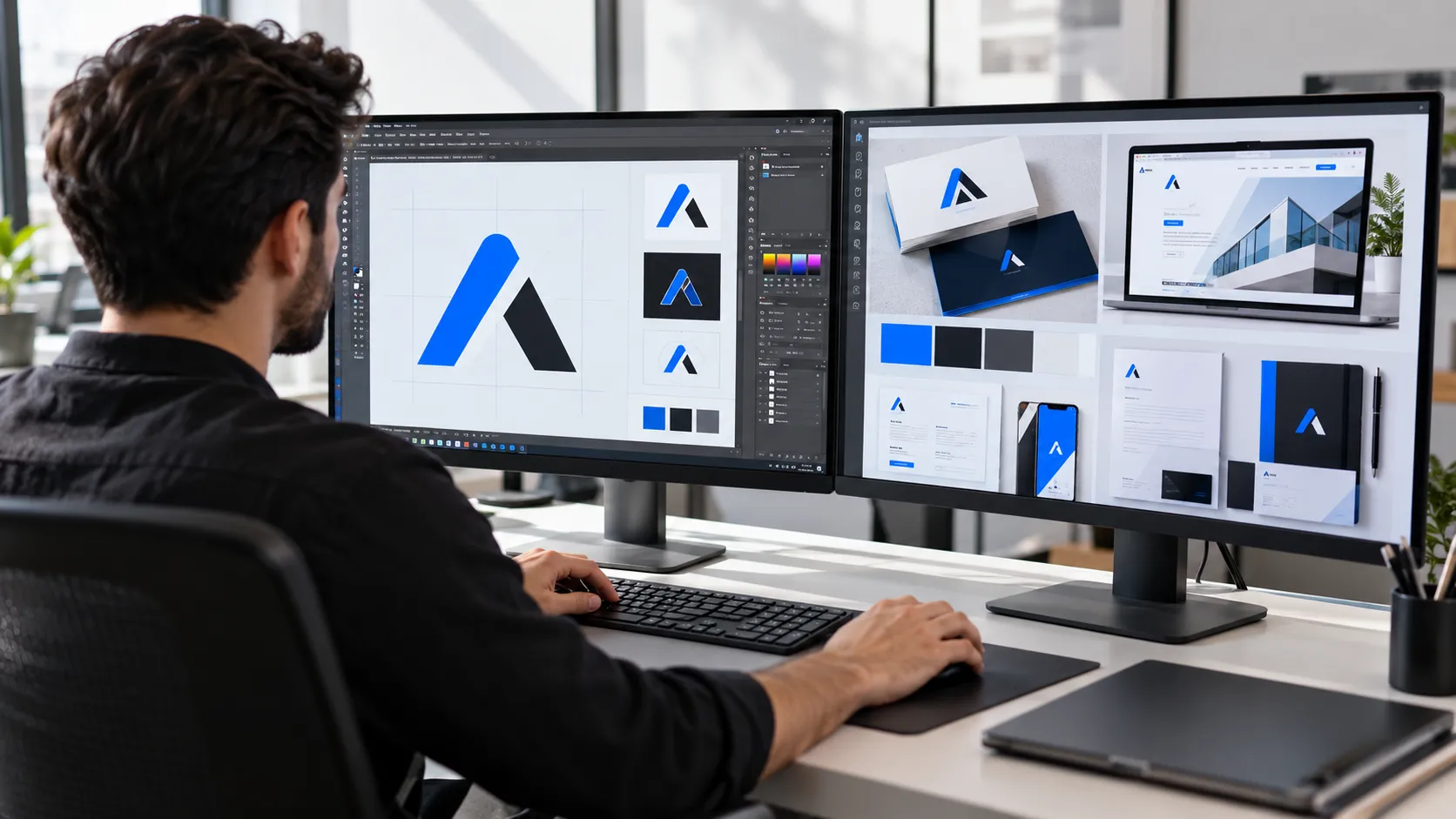
You have a logo. Your website has its own colours. Your Instagram posts have another look. Your business cards use a different font, and your presentation template seems to have come from somewhere else entirely.
Put everything side by side.
Would someone immediately know that all of it belongs to the same business?
If yes, you probably have some form of brand identity already.
If not, you may have a logo, but the brand around it still needs work.
The two often get mentioned together, but they serve different purposes when you are building a business.
Let’s Understand a Logo’s Concept First
Think about seeing a familiar sign while driving.
You don't stop the car to read the company's history. A quick look is often enough to know which business it belongs to.
That's what a logo is supposed to help with.
It gives your business a visual identifier that can appear on your website, packaging, signage, social media, documents and other materials.
A logo might be made from a name, a symbol, or both.
The important thing is that it should work as an identifier without becoming difficult to use.
A logo that looks impressive on a large screen but becomes unreadable on a small social media profile isn't doing its job very well.
The same applies to print.
A business may use its logo on a storefront one day and on an invoice or promotional graphic the next. The design needs to survive those changes in size and format.
So, when a business looks for logo design services in Dubai, it shouldn't only ask, "Can you make us something attractive?"
It should also ask whether the logo will actually work wherever the business needs to use it.
Then What Exactly Is Brand Identity?
Now imagine that you remove the logo from your website.
Then remove it from your Instagram posts.
Look at the colours, fonts, photography, layouts and graphics that are left behind.
Would the business still feel recognisable?
That's the job of a brand identity.
Brand identity is the collection of visual and communication choices that give a business a consistent personality.
The logo is part of it.
So are the colours.
So are the fonts.
The style of photography, illustrations, icons, layouts and even the way marketing messages are written can also be part of that identity.
Think of it as the difference between having a face and knowing how you present yourself.
A logo gives people something to recognise.
An identity helps make the rest of the experience feel like it belongs to the same business.
Logo and Brand Identity Are Not Competing Options
The title of this article makes it sound like you have to choose one.
In reality, that's not always the case.
A logo can exist on its own.
Brand identity can include a logo.
The difference is really about how much of the brand you need to define.
Suppose you're opening a small consultancy. You already know your preferred colours, your website style is established and you mainly need a professional mark to put on your website and documents.
You may not need a huge branding exercise.
Now take a company launching a new consumer brand.
It needs a logo, website, packaging, social media templates, advertising material, photography direction and printed collateral.
That business has many more places where the brand needs to look consistent.
A logo alone won't provide those rules.
That's where the wider identity becomes useful.
When Is Logo Design Enough?
Sometimes, you simply need a better logo.
Maybe you've been using a design you created years ago.
Maybe the business has grown, but the logo still looks like something made for a much smaller company.
Or perhaps you don't have a proper logo at all.
There are also practical reasons to redesign one.
Your current logo may not work well on mobile screens. It may look poor in black and white. Perhaps you only have one file, which makes it difficult to use for print or large-format applications.
In these situations, the problem isn't necessarily your entire brand.
The logo itself may simply need attention.
A professional logo designer in Dubai can look at where and how the mark will be used and create something that works across those applications.
When Does Your Business Need a Brand Identity?
The situation changes when the business starts appearing in many places.
Your website needs one look.
Your social media needs another format.
Your sales team needs presentations.
Your marketing team needs advertisements.
Your packaging needs to match everything else.
And if several people are producing this material, consistency becomes harder to maintain.
One person picks a dark blue.
Another uses a slightly different blue.
Someone changes the font because they think it looks better.
Another designer places the logo differently.
Nobody is necessarily doing anything wrong. There simply isn't a shared system telling everyone what to do.
A brand identity gives them that system.
It becomes especially useful when you're:
Launching a new business
Rebranding an existing company
Expanding into new markets
Building several marketing channels
Growing an internal marketing team
Working with multiple designers or agencies
What Goes into a Brand Identity?
There isn't a universal shopping list.
A restaurant with physical locations will have different branding requirements from a software company selling entirely online.
Still, most identity projects deal with several common elements.
Logo System
Not just one logo file.
You may need primary and secondary versions, horizontal or vertical arrangements, an icon, and variations that work on different backgrounds.
Colours
A defined colour palette prevents every designer from choosing a slightly different shade.
It also gives the brand some visual consistency.
Typography
The fonts used for headings, body copy and other communications can influence how the business feels.
The choice matters even more when different people are producing content.
Imagery
A brand can also have a particular approach to photography, illustrations or other visual content.
A luxury brand and a children's business probably shouldn't use imagery in exactly the same way.
Supporting Design Elements
Patterns, shapes, icons, graphics and other elements can help build a recognisable visual language around the main logo.
Brand Guidelines
This is where everything comes together.
Guidelines can show people how the logo, colours, typography and other elements should be used.
The scope can be small or extensive depending on what the business actually needs.
Can You Have a Good Logo Without a Brand Identity?
Absolutely.
A logo doesn't suddenly become bad because a company hasn't created a 50-page brand guideline.
For some businesses, a well-designed logo and a clear understanding of their visual direction may be enough at a particular stage.
The problem comes when the business grows but its visual system doesn't grow with it.
Imagine adding rooms to a house without deciding where the doors, windows and electrical points should go.
You can keep adding things, but eventually the lack of planning starts showing.
Brand identity works in a similar way.
It gives future design decisions somewhere to come from.
How Do the Two Work Together?
Your logo should not feel like a random piece of artwork sitting inside the brand.
It should belong there.
Take a company with a modern logo, a muted colour palette, clean typography and minimal photography.
Those choices can reinforce one another.
Now imagine the same company suddenly starts using bright colours, decorative fonts and completely different imagery in its social media campaigns.
The logo hasn't changed.
But the brand experience has.
This is why corporate branding involves more than putting a company logo on every document.
The different pieces need to support one another.
So, What Does Your Business Actually Need?
Here's a simple way to look at it.
You May Need Logo Design If:
You don't have a professional logo yet.
Your current logo feels outdated.
The existing design doesn't work across different formats.
You're changing your business name or visual mark.
Your wider brand direction is already established.
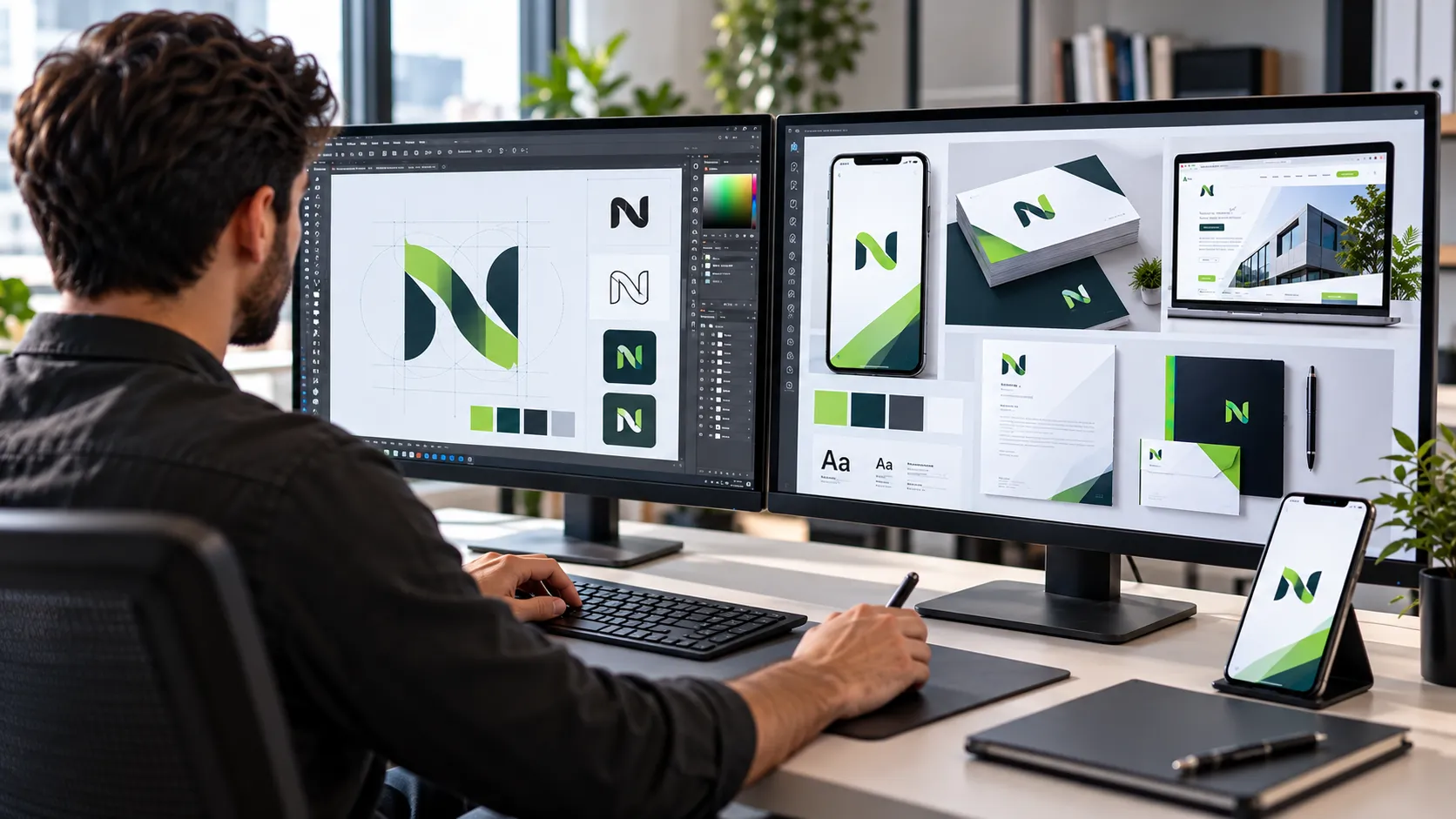
A Brand Identity May Make More Sense If:
You're launching a brand from scratch.
Your marketing materials look inconsistent.
Several people create content for the business.
You're preparing for a rebrand.
Your business appears across many customer touchpoints.
You need clear design rules for your team and suppliers.
And sometimes the answer is both.
A new logo can become the starting point for a broader identity rather than a standalone design project.
What Should You Check Before Hiring a Designer?
Don't choose a designer based on one impressive logo mockup.
Ask yourself where that logo will actually be used.
Website?
Packaging?
Social media?
Signage?
Business documents?
Advertising?
A good designer should understand those requirements before creating the final concept.
Look through their portfolio as well.
Do they only show polished presentation images, or can you see how their designs work across real applications?
If you're considering a wider brand identity project, ask what you'll receive at the end.
Will there be logo variations?
Colour specifications?
Font recommendations?
Usage guidelines?
Templates?
The clearer the deliverables are at the beginning, the easier it is to understand what you're paying for.
Frequently Asked Questions
How is a logo different from a brand identity?
A logo gives people a way to recognise your business. A brand identity goes beyond that, covering the visual and communication choices that shape how the business appears across different channels.
What is included in brand identity design?
It can include the logo system, colours, typography, imagery direction, supporting graphics and brand guidelines. The exact scope depends on how the business plans to use the identity.
Does a new business need both a logo and brand identity?
That depends on the business. If the immediate need is simply a professional logo, a logo project may be enough. Businesses preparing to use several marketing channels may benefit from defining a broader identity from the start.
How much does logo design cost in Dubai?
There isn't one fixed price. The cost can vary according to the design scope, number of concepts, revisions, logo variations and required deliverables.
How long does logo design usually take?
The timeline depends on the scope of the project, the research involved, concept development, revisions and final file preparation.
How do I choose a logo designer in Dubai?
Review their portfolio, ask about their design process and confirm what will be included in the project. Make sure they understand where and how your logo will be used before the work begins.
Conclusion
A logo can tell people which business they're looking at.
A strong brand identity makes the business feel familiar across different customer touchpoints.
That's the real difference.
If you're launching a small business and simply need a professional mark, you may not need to build an entire identity system immediately.
If you're creating a brand that will appear across websites, social media, packaging, advertising and other customer touchpoints, you may need more than a logo.
Start with what your business needs today, then build from there.
Need help creating a professional logo for your Dubai business? Get in touch with Logix Contact at +971 4 238 7608 or dxb@logixcontact.com, or visit our Dubai office.